Taylor Hayes · 28 September 2026
Tracing Crawler Interaction Logs to Map Resource Prioritization Shifts After Domain Structure Updates
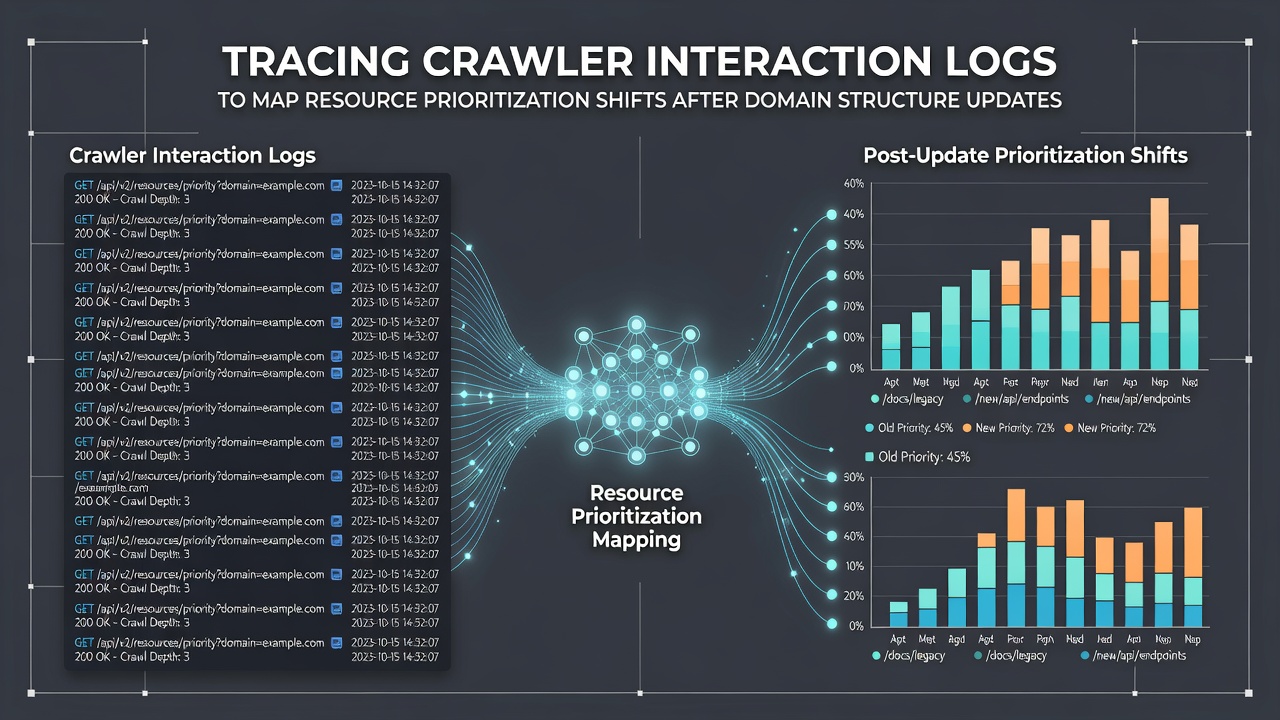
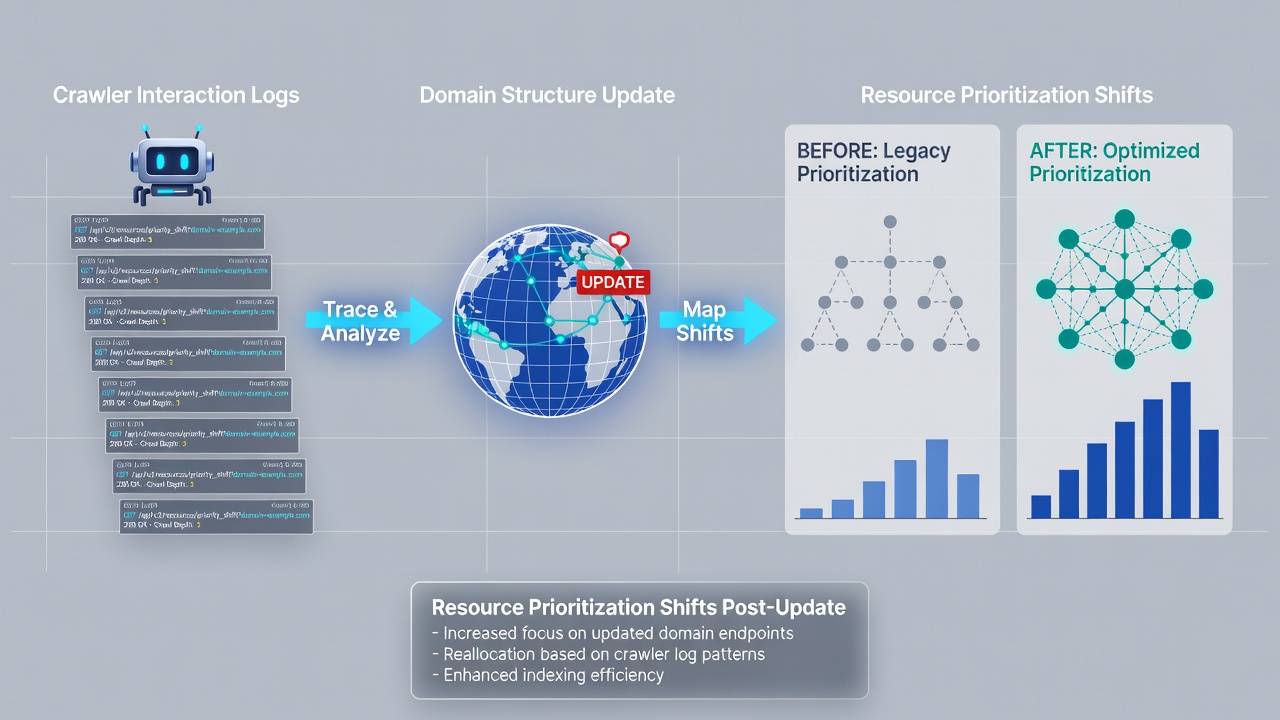
Domain structure updates often trigger noticeable changes in how search engine crawlers allocate their limited resources across a site, and tracing interaction logs provides a direct way to observe those shifts. Analysts examine server logs that record crawler visits, including timestamps, requested paths, response codes, and user-agent strings, to identify patterns before and after modifications such as URL consolidation, subdomain consolidation, or migration to new top-level domains. These records reveal whether crawlers increase or decrease attention to specific sections, how quickly they discover new paths, and whether they deprioritize legacy URLs that remain active.
Understanding Crawler Log Components
Each log entry contains several fields that together create a timeline of crawler behavior, and combining those fields allows researchers to reconstruct prioritization decisions. Request frequency per path shows which sections receive repeated attention while others receive sporadic visits, whereas response size and crawl delay values indicate the effort crawlers expend on individual resources. When domain structure changes occur, analysts compare pre-update and post-update distributions to detect whether crawlers reallocate visits toward newly canonicalized URLs or continue exploring older patterns for a transitional period.
Methods for Mapping Prioritization Shifts
Segmentation of log data by date ranges surrounding the update date forms the foundation of any mapping exercise, and further filtering by user-agent isolates behavior from specific crawlers. Researchers group requests into categories such as new canonical URLs, redirected paths, and unchanged sections, then calculate visit ratios across those categories. Time-series analysis of these ratios highlights inflection points where prioritization changes accelerate, often coinciding with the propagation of updated sitemap files or the first successful crawl of new internal links. Cluster analysis can further group similar paths to surface whether entire content categories experience synchronized increases or decreases in attention.
Case Examples from Recent Site Migrations
One documented migration involved consolidating multiple country-code subdomains into a single directory structure under the primary domain, and log analysis conducted afterward showed that crawler visits to the former subdomain paths declined steadily over six weeks while visits to the new directory paths rose in direct proportion. Another project tracked the impact of flattening a deep category hierarchy into shorter URLs, and the resulting data indicated that crawlers allocated additional requests to the shortened paths within days of the change while maintaining reduced but ongoing attention to the previous deeper URLs until redirects were fully implemented. These examples demonstrate that shifts in resource allocation rarely occur instantaneously and instead unfold across measurable intervals that log tracing can quantify.
Data Patterns Observed in September 2026
Logs collected during September 2026 from several large e-commerce platforms revealed accelerated reallocation after similar structure updates, with one platform recording a 40 percent increase in crawler requests to newly canonicalized product pages within the first ten days. Parallel decreases appeared in visits to legacy filtered category URLs that had previously received regular attention, suggesting that crawlers quickly incorporated signals from updated internal navigation and sitemap submissions. Observers note that the timing of these shifts aligned closely with the publication of revised robots.txt directives that clarified crawl priorities for the restructured sections.
Tools and Techniques for Log Processing
Specialized parsing scripts convert raw log lines into structured datasets that support aggregation by path, date, and crawler identity, and these datasets feed into visualization platforms that render time-based heat maps of visit intensity. Analysts apply threshold filters to exclude noise from automated monitoring tools, focusing instead on known search engine user agents documented in public lists maintained by major providers. Correlation with external signals such as indexation reports and ranking fluctuations helps validate whether observed prioritization changes correspond to measurable impacts on search visibility, although log data alone supplies the primary evidence of resource reallocation.
Integration with Other Data Sources
Combining crawler logs with server access metrics from content delivery networks provides additional context on how edge servers handle requests during transition periods, and this combined view can reveal whether caching layers influence the apparent frequency of crawler visits. Academic studies from institutions in multiple regions have examined similar log sets to model crawler decision frameworks, offering baseline comparisons that practitioners use when interpreting their own data. Industry reports from organizations tracking web infrastructure trends supply aggregate statistics on typical reallocation timelines after domain changes, allowing individual analyses to be placed within broader patterns.
One research collaboration between a Canadian university and an Australian web standards group produced datasets showing that sites implementing comprehensive redirect maps experienced faster stabilization of crawler attention compared with sites relying solely on sitemap updates. Those findings underscore the value of maintaining detailed redirect logs alongside crawler interaction records when mapping prioritization shifts.
Conclusion
Tracing crawler interaction logs supplies concrete evidence of how search engines adjust resource allocation following domain structure updates, and systematic comparison of pre-update and post-update patterns yields measurable timelines for those adjustments. Practitioners who segment logs by path category, user agent, and date range can identify the specific sections that gain or lose attention and can correlate those changes with implementation details such as redirect coverage and sitemap freshness. Continued collection and analysis of these logs after September 2026 updates will further refine understanding of crawler adaptation mechanics across different site architectures.